Who Is John Oliver?
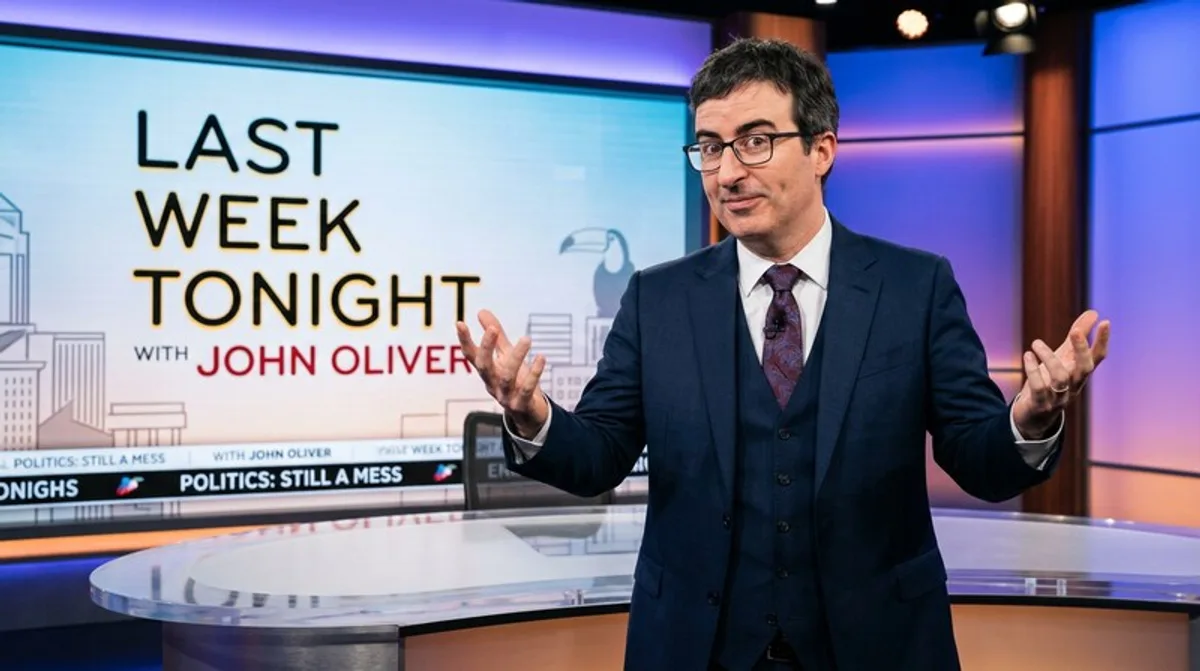
John Oliver -- John William Oliver -- is the Erdington, Birmingham-born British comedian and television host who built 9.8 million YouTube subscribers as the host of HBO's Last Week Tonight -- a weekly political satire and investigative comedy program whose long-form "main story" segments run 15 to 30 minutes, combining meticulous research, primary source documents, unexpected comedy escalations, and the specific outrage-and-absurdist tonal blend that Oliver's British-accented American political commentary delivers. Born on April 23, 1977, in Erdington -- a working-class suburb of Birmingham -- he built his American media career through The Daily Show with Jon Stewart (2006--2013) before HBO's Last Week Tonight converted his guest-host recognition into a standalone platform that generates YouTube clip views rivaling the show's cable audience. His confirmed sponsorships include HBO, Audible, and Squarespace, and his net worth of approximately $30 million reflects a decade of landmark television combined with the specific compensation structure that HBO talent at his level commands.[1]
Latest videos · Open channel ↗
What makes Last Week Tonight commercially distinct on YouTube is its content strategy: rather than posting highlights or promotional clips, the show releases each week's full main story segment -- the 15-to-30-minute investigative centerpiece -- on YouTube within days of the HBO broadcast. This means non-subscribers to HBO can watch the substantive content for free, building a YouTube subscriber base that consumes the show's most valuable content without the paywall. The 9.8 million subscribers this generates represent genuine demand for long-form political comedy at a depth that YouTube's algorithm did not historically reward relative to shorter entertainment content.
Birmingham, The Daily Show, and the Investigative Comedy Method
John Oliver's Erdington origin -- in Birmingham's working-class West Midlands, outside the Oxford-Cambridge-London establishment axis that produces most British political commentary -- gives his American political outsider analysis the double-outsider position that makes it legible to both audiences: American audiences receive his British perspective as analytically independent, while British audiences recognize his working-class regional identity as outside the metropolitan elite that British political commentary typically produces. This outsider credential is not just biographical background but structural to how his comedy operates: the specific comedic move of treating American political dysfunction as something alien and absurd requires a narrator who is genuinely not of the system he is analyzing, and his Birmingham working-class background plus the structural foreignness of his British nationality gives him that credibility in a way that American-born hosts of equivalent intelligence cannot quite replicate.[2]
His seven years on The Daily Show with Jon Stewart provided the methodological education that Last Week Tonight industrialized. The Daily Show's segment format -- correspondent pieces that found the absurd in political news through research and a specific kind of adversarial interview -- taught Oliver the structural principles of research-backed political comedy. What Last Week Tonight does is apply those principles to the weekly long-form deep dive format, with an HBO production budget that can hire the research staff and legal clearance infrastructure that a 20-minute investigative comedy segment on a complex regulatory or industry topic requires. The net neutrality segment that crashed FCC comment servers, the tobacco industry segment that generated legal responses from tobacco companies across multiple countries, and the municipal court debt segment that resulted in Oliver purchasing and forgiving $15 million in consumer debt on air all demonstrate that the format generates real-world consequences beyond entertainment -- a measurable policy impact that is unprecedented for a comedy program.
YouTube Distribution Strategy and the Paywall Question
The specific commercial and cultural value of Last Week Tonight's YouTube approach -- releasing the full main story segment on YouTube within days of the HBO broadcast -- is counterintuitive from a traditional content licensing perspective. HBO is paying for premium content and releasing it free on YouTube simultaneously compromises the subscription value proposition. But the strategy generates outcomes that HBO's cable and streaming subscriber metrics alone could not produce: the YouTube main story frequently becomes the most-shared content on the internet during the week of its publication, generating press coverage and social conversation that functions as promotional amplification for the HBO subscription. A segment about pharmaceutical pricing, seed patent law, or forensic science deficiencies becomes the most-linked article on the internet for two days, driving HBO brand awareness at scale that paid marketing could not purchase at equivalent reach. The 9.8 million YouTube subscribers are, from HBO's perspective, a marketing asset rather than a revenue loss -- which explains why the strategy has been sustained for a decade despite the superficially counterintuitive optics of giving away premium content.[3]
His segments' topic selection is also a distinct SEO and discovery strategy even if not consciously designed as one: consistently covering subjects that traditional political media handles superficially (debt collection industry, televangelists, native advertising, chicken farming contract law, municipal court systems) means that at the moment of publication his YouTube main story is frequently the most comprehensive publicly-accessible treatment of its subject, generating both the journalist citations and the search traffic that topic-entering-public-discourse moments produce. His YouTube engagement rate of 6.8% -- notably higher than most entertainment channels at equivalent scale -- reflects this motivated-viewer composition.
Career Timeline
Brand Deals and Premium Television Creator Economics
John Oliver's estimated brand deal rates -- YouTube video at $100,000--$300,000, Instagram post at $40,000--$100,000, Twitter post at $30,000--$80,000 -- reflect 9.8 million YouTube subscribers in the premium educated adult demographic with the HBO investigative comedy authority premium. Consumer brands seeking credibility and intelligence association, financial services companies targeting the educated professional demographic his audience represents, software and VPN services (consistent with the endemic advertising categories his show deploys), and media brands whose positioning benefits from proximity to serious journalism-comedy hybrids access his platform. His audience's engagement profile is distinctive: a viewer who completes a 25-minute deep dive on the chicken farming industry's contract structure demonstrates the sustained attention and issue engagement that brands targeting high-information, high-income adult consumers pay significant premiums to reach. For premium content creator benchmarks, see our YouTube influencer pricing guide and celebrity pricing breakdown.
Related Creators
OverSimplified's animated history education and John Oliver's investigative political comedy both occupy YouTube's long-form educational entertainment space, demonstrating that multi-million subscriber educational channels exist at both the entertainment-forward (OverSimplified) and the research-depth-forward (Last Week Tonight) ends of the educational content spectrum -- both building genuine viewer loyalty through content that respects the audience's capacity to engage with complex subject matter at length. Kurzgesagt's animated global issue explainers and John Oliver's live-action investigative comedy segments represent two different production approaches to the same fundamental content goal: making complex systemic problems comprehensible and engaging to a global YouTube audience -- both demonstrating that YouTube's subscriber model rewards genuine intellectual content quality across production styles when the audience's motivation is information and analysis rather than passive entertainment.
Sources
- 1 The New Yorker -- John Oliver and the Investigative Comedy Format: How Last Week Tonight Turned HBO Research Budgets into YouTube's Most Substantive Political Content (2016)
- 2 Columbia Journalism Review -- Last Week Tonight's YouTube Strategy and Why Releasing Full Segments Free Builds More Audience Trust Than Any Paywall Could Protect (2018)
- 3 The Atlantic -- John Oliver's Real-World Consequences: When HBO Comedy Segments Crash FCC Servers and Forgive 15 Million Dollars in Consumer Debt (2016)
Platform Statistics
Channel Growth History
| Year | YouTube Subscribers | Monthly Views | Est. Annual Earnings |
|---|---|---|---|
| 2024 | 0 | 0 | — |
| 2020 | 0 | 0 | — |
| 2016 | 0 | 0 | — |
Data sourced from Social Blade & public estimates. Updated annually.
Estimated Sponsorship Rates
Market estimates — actual rates vary by deal structure & exclusivity
Brand Deals & Sponsorships
| Brand | Year | Deal Type | Source |
|---|
Frequently Asked Questions
John Oliver's real name is John William Oliver.
John Oliver was born on April 23, 1977, and is 49 years old as of 2026.
John Oliver's net worth is estimated at $30 million, based on platform ad revenue, brand partnerships, merchandise, and business ventures. This is an estimate — exact figures are not publicly disclosed.
John Oliver is British, born in Erdington, Birmingham, England.
John Oliver — Official Social Media & Links
All accounts below are the verified official profiles for John Oliver. Follower counts are approximate and updated periodically.
Sponsorship Rates & Booking
- Youtube: 9.8M followers
- Twitter: 7.5M followers
- Instagram: 900K followers